Fuel Theft and Diversion: Warning Signs Across the Supply Chain
· Report Fuel Editorial Team
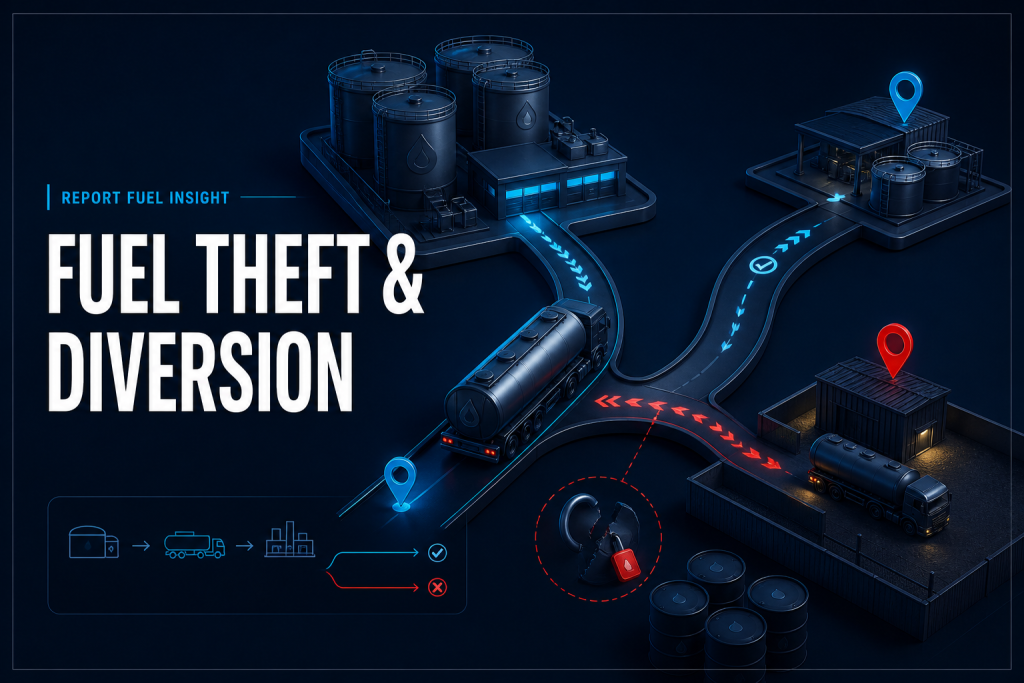
Fuel can be stolen physically, diverted commercially or concealed through false measurements and records.
This guide is educational and does not replace legal, technical, safety or regulatory advice. Apply current South African law, licence conditions, contracts and site procedures to the facts.
Map custody points
Document every point where product, title or data changes hands: terminal release, loading, gate exit, route, depot entry, offload, storage and dispensing.
Assign responsibility and evidence requirements at each handover.
Transport warning signs
Unplanned stops, geofence breaches, lost signal, route looping, seal discrepancies, substituted vehicles, changed delivery instructions and implausible travel times require review.
Telematics should be corroborated with gate, meter, camera and driver records.
Volume and stock analytics
Compare ordered, loaded, delivered and dispensed quantities using consistent measurement and temperature treatment. Investigate patterns by vehicle, driver, route, shift and customer.
Avoid treating every variance as theft; calibration, temperature and genuine operational losses must be considered.
Insider and collusion risk
Override concentration, shared credentials, unexplained lifestyle signals, unusual leave coverage, supplier relationships and repeated exception approval may indicate compromised control.
Protect staff from unfair accusation by using independent review and consistent thresholds.
Response and prevention
Freeze relevant records, preserve CCTV before overwrite, secure access logs and obtain specialist advice. Redesign controls after each incident rather than merely replacing a person.
Use the Petroleum Evidence Preservation Checklist to protect time-sensitive records and chain-of-custody information.
Practical next steps
- Protect people, product and time-sensitive evidence.
- Record facts and preserve originals.
- Verify entities, licences, source and transaction records independently.
- Use competent testing or professional advice where the risk warrants it.
- Report through a safe, appropriate channel.
Frequently asked questions
What is diversion?
Redirection of product from its authorised destination or purpose, often concealed in documents or systems.
Can technology eliminate theft?
No. It improves detection only when permissions, reviews and responses are disciplined.
Which evidence expires fastest?
Often CCTV, telematics and transient system logs.
Authoritative references: SARS: non-compliance, adulteration and illicit trade; South African Government: petroleum services and licensing; Petroleum Products Amendment Act 2 of 2005. Regulatory facts should always be checked against the latest official publication.