How to Preserve Fuel Evidence and Chain of Custody
· Report Fuel Editorial Team
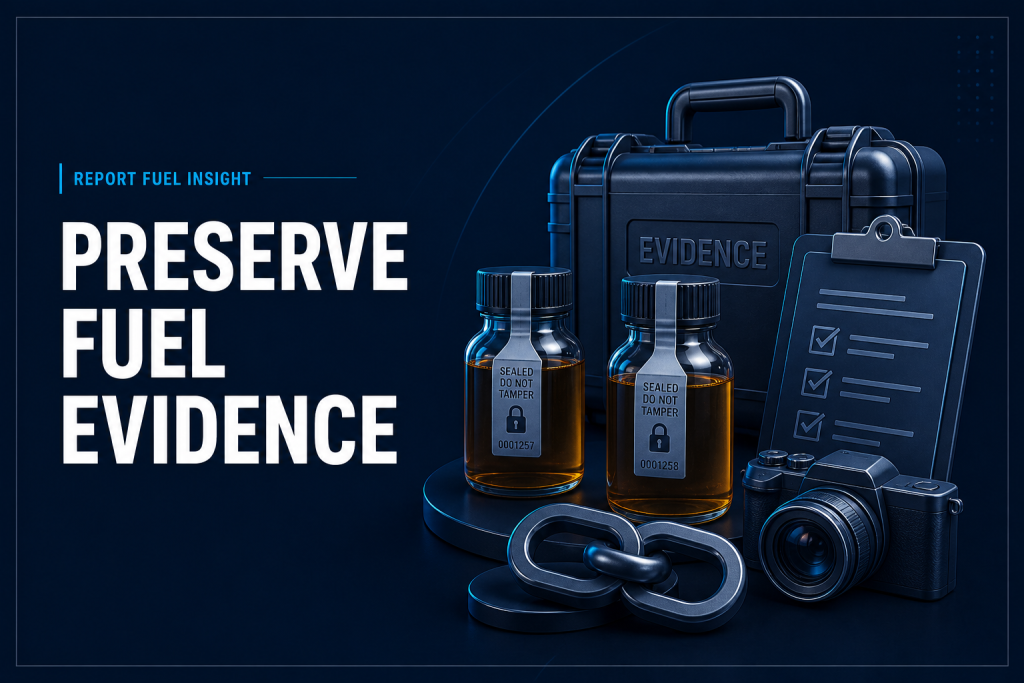
Evidence is valuable only if a reviewer can understand what it is, where it came from and whether it remained materially unchanged.
This guide is educational and does not replace legal, technical, safety or regulatory advice. Apply current South African law, licence conditions, contracts and site procedures to the facts.
Create a contemporaneous chronology
Start a dated log as soon as concern arises. Record who noticed what, the operational decision taken, tank or vehicle status, deliveries, sampling steps and every transfer of custody.
Use objective language and correct mistakes transparently. A later reconstruction from memory is weaker than a simple record made at the time.
Control the physical sample
Use suitable clean containers, tamper-evident seals and unique identifiers. Record the precise sampling point, method, date, time, tank conditions, quantity and sampler. Photograph the sealed container and label.
Store samples under conditions appropriate for petroleum products, with controlled access. Safety legislation and site procedures always take priority.
Preserve documents and digital records
Retain original invoices, delivery notes, weighbridge tickets, loading instructions, GPS data, access logs, CCTV exports and messages. Export systems in a way that records the source, time range and person performing the export.
Do not crop away context or overwrite original files. Work from copies, calculate hashes where specialist support is available, and keep an evidence index.
Document every handover
A chain-of-custody form should identify the item, person releasing it, person receiving it, date, time, purpose, seal condition and storage destination.
Prepare an evidence pack
Lead with a factual summary and chronology. Follow with indexed exhibits, sampling records, laboratory reports and key questions requiring resolution.
Related resources:
Report responsibly
If you have information about suspected petroleum misconduct, use the secure Report Fuel reporting portal. Do not send sensitive evidence by ordinary email.